Ode to the Organizers: Debbie Westheimer
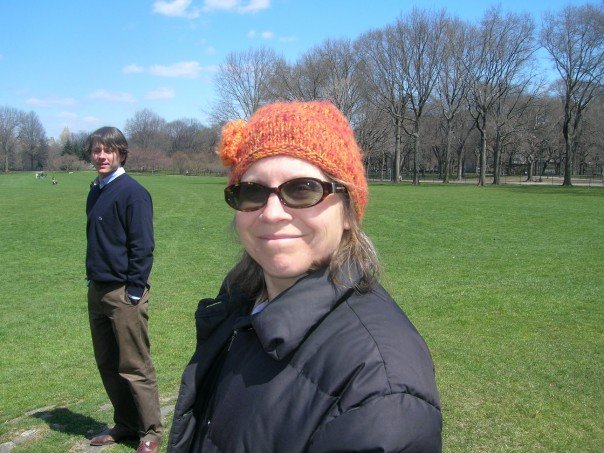
After being elected the next Organizer of the NY Tech Meetup, I thought it would be a good time to write tributes the Organizers who have been most influential in shaping my interest in and philosophy of organizing. I’m starting my “Ode to Organizers” series by recognizing my mother, Debbie Westheimer.

me-mother-centralpark
The single most influential community organizer in my life has been my mom. No joke!

When my family decided to home school in the mid-80s, there were no secular home school support groups in the Cincinnati area. So, along with 3 or 4 other mothers, my mom founded the Home School Network of Greater Cincinnati. By the time I stopped home schooling and went to high school, the group was 350 families strong.

Despite its tremendous growth (or perhaps lending itself to it), the group has remained grassroots in nature, largely due to my mother’s involvement and the organizing style she instilled early on. For instance, instead of being an over-reaching and top heavy organization needing professional aministration, the group always focused on self-organization and, using a monthly newsletter, a phone tree and a shared calendar to encourage member to member communication and coordination for get-togethers, events and initiatives.

(Fun Fact: I edited the Sports Page of the monthly newsletter and ran the baseball card trading club.)

For the first 10 years or so of the organization’s life, my mother was the glue that held things together: she invested herself in developing new leadership and facilitating organizational meetings. Greatly influenced by her experience at Earlham College (a Quaker school), she built an organization on foundations of egalitarianism and the belief that every member was capable of contributing and being a leader within the group. In fact, she made it clear that without the participation of everyone in the organization, the organization would cease to exist.

Today, because of the organization she built, hundreds of families in the greater Cincinnati area have been empowered to educate their childen at home. Her work has touched the lives of thousands.

But my mom’s organizing didn’t stop there.

Also in the mid-80s, my mom founded a food co-op out of our home. Using her network of friends (many from the Home School Network), she coordinated the Lake Allyn Food Co-op.

At first, she managed the monthly buying and distribution of food from our farm. But, as the co-op grew, so did the responsibilities. Naturally, she made it a mandatory part of membership to have some sort of responsibilities: meeting the delivery truck; keeping the books; splitting up the bulk items when they had been bought collectively; delivering food to those who couldn’t make it; collecting orders; dealing with the distributor; etc.

During the years she ran the food co-op, I watched my mom lean on the other members to get stuff done. When someone didn’t do their work — when checks weren’t deposited or the truck wasn’t met — it would fall back on her, and she would either have to turn around get pick up the slack or get someone else to do the work. Watching her delegate has been one of the most influential experiences I’ve had in learning to manage an organization. The work needed to be done — she made it clear — so who’s going to do it?

(Fun Fact: The Lake Allyn Food Co-op was the first place my brother and I sold produce, prior to the founding of Westheimer Bros Plants & Produce.)

The things I’ve learned from my mother are innumerable — but the things I’ve learned about Organizing from her are clear:

Healthy organizations rest solely on the participation of its members. Either you’re in or you’re out, because the work must be done. Lastly, organizing is in its purest form when working with other people makes your and their lives mutually better — whether it’s to support the education of your children or to collectively gain access to healtheir, more affordable food.

To my mother, thank you.

This entry was posted in Leadership, Ode to Organizers. Bookmark the permalink.
  • http://innonate.com/ innonate

    Well, to be honest my dad taught me that one. He's next to be honored
    on this blog. Taught me a lot about organizing too.

  • http://innonate.com/ innonate

    Well, to be honest my dad taught me that one. He's next to be honored
    on this blog. Taught me a lot about organizing too.

  • http://innonate.com/ innonate

    I think it's all possible.

    I mean, I don't think private groups are a bad thing, as long as there
    is also plenty of public organizing going on.

    I quite enjoy hanging out with particular private crew on a regular
    basis, and I don't see a need to Tweet it out and invite more people.
    If fact, I think get-togethers like that are important elements of a
    healthy ecosystem.

    However, Open culture has been fundamental to our industry and
    community's advancement. The more folks meet the more they can connect
    and the more efficient our system/ecosystem becomes.

    I think we can be more a more efficient community, and I think we'll
    get there by being more inclusive. It's to the community's benefit to
    do it!

  • http://innonate.com/ innonate

    I think it's all possible.

    I mean, I don't think private groups are a bad thing, as long as there
    is also plenty of public organizing going on.

    I quite enjoy hanging out with particular private crew on a regular
    basis, and I don't see a need to Tweet it out and invite more people.
    If fact, I think get-togethers like that are important elements of a
    healthy ecosystem.

    However, Open culture has been fundamental to our industry and
    community's advancement. The more folks meet the more they can connect
    and the more efficient our system/ecosystem becomes.

    I think we can be more a more efficient community, and I think we'll
    get there by being more inclusive. It's to the community's benefit to
    do it!

  • http://www.whitneyhess.com/blog Whitney Hess

    Earlham College is the bomb. I have a friend who went there and he raves about the sense of equality among and individual contribution of its community members. I'd like to see a more inclusive NY tech scene without factions and social climbing. Do you think that's possible?

  • http://www.whitneyhess.com/blog Whitney Hess

    Earlham College is the bomb. I have a friend who went there and he raves about the sense of equality among and individual contribution of its community members. I'd like to see a more inclusive NY tech scene without factions and social climbing. Do you think that's possible?

  • adventurista

    Pretty great. I would like to add my two cents and personally thank Mrs Westheimer for teaching Nate the word “hegemonic”.

  • http://www.adventurista.com/ Sarah Tavel

    Pretty great. I would like to add my two cents and personally thank Mrs Westheimer for teaching Nate the word “hegemonic”.

  • Sarah

    Okay well I'll have to issue the same thanks when you publish your dad blog post. :)

  • http://www.adventurista.com/ Sarah Tavel

    Okay well I'll have to issue the same thanks when you publish your dad blog post. :)

  • Dick Westheimer

    Nate: Well stated. As one of the observers of the Homeschool Network's founding, I echo your statements. I would add several observations that add color to your description. The network's initial growth was facilitated by the biweekly open houses Deb organized at the farm. These unprogrammed “meet ups” were at the heart of the model. They reinforced the notion that education was not the stuff of “experts” but of networks.

    The second item has to do with governance: HSN was organized by a small group who immediately ceded authority to…everybody. The governance board was comprised of whomever showed up at governance meetings. Structurally, four people each year (a treasurer, the newsletter editor, the phone contact person, and one other) committed to showing up at each meeting but decisions were made by consensus by all comers. Each meeting started with a statement of inclusive principles and a reminder of the responsibilities of the consensus process.

    The final success of the model was that as soon as it grew to big and unwieldy, it spawned new inclusive (and exclusive) organizations founded on similar principles. Self-organization run amuck!

    One final note: THis utopian model DID eventually come unglued. It was always unstable and subject to the excesses of certain individuals. These individuals excesses were magnified as the organization grew. But they were also magnified by new technology — namely email. Email allowed folks to distribute their “grievances” quickly and widely. Small items of contention became big. And big ones became unmanageable. C'est la vie, eh?

  • Dick Westheimer

    Nate: Well stated. As one of the observers of the Homeschool Network's founding, I echo your statements. I would add several observations that add color to your description. The network's initial growth was facilitated by the biweekly open houses Deb organized at the farm. These unprogrammed “meet ups” were at the heart of the model. They reinforced the notion that education was not the stuff of “experts” but of networks.

    The second item has to do with governance: HSN was organized by a small group who immediately ceded authority to…everybody. The governance board was comprised of whomever showed up at governance meetings. Structurally, four people each year (a treasurer, the newsletter editor, the phone contact person, and one other) committed to showing up at each meeting but decisions were made by consensus by all comers. Each meeting started with a statement of inclusive principles and a reminder of the responsibilities of the consensus process.

    The final success of the model was that as soon as it grew to big and unwieldy, it spawned new inclusive (and exclusive) organizations founded on similar principles. Self-organization run amuck!

    One final note: THis utopian model DID eventually come unglued. It was always unstable and subject to the excesses of certain individuals. These individuals excesses were magnified as the organization grew. But they were also magnified by new technology — namely email. Email allowed folks to distribute their “grievances” quickly and widely. Small items of contention became big. And big ones became unmanageable. C'est la vie, eh?

  • BillSeitz

    awesome story

  • BillSeitz

    awesome story

  • http://innonate.com/ innonate

    Thanks for the added insight, especially in regards to “open home” and the regular meetups, and in regards to new institutions replacing old ones. That's healthy, right?

    As to the un-gluing of the group, do you think some of that had to do with the high turnover of home schooling families? Kids grow up and parents lose interest, then new families come in and have no memory of how things were…

    I think one of the most important aspects of an industry community is presence of multiple generations of community members. With NY tech, folks who were around in Web 1.0 have a lot to share and teach and invest, as the web 2.0 generation works their collective butts off to out do the previous generation (and return their investment).

    There must be a lesson on multiple generational involvement here…

  • http://innonate.com/ innonate

    Thanks for the added insight, especially in regards to “open home” and the regular meetups, and in regards to new institutions replacing old ones. That's healthy, right?

    As to the un-gluing of the group, do you think some of that had to do with the high turnover of home schooling families? Kids grow up and parents lose interest, then new families come in and have no memory of how things were…

    I think one of the most important aspects of an industry community is presence of multiple generations of community members. With NY tech, folks who were around in Web 1.0 have a lot to share and teach and invest, as the web 2.0 generation works their collective butts off to out do the previous generation (and return their investment).

    There must be a lesson on multiple generational involvement here…

  • Dick Westheimer

    “new institutions replacing old ones. That's healthy, right?”
    Hmmm. I think so. Jefferson called for revolution in institutions every generation. But he was very pleased in his dotage the the institutions he created in revolution endured!

    As for the roots of the ungluing, you are partly right. But it really had more to do with size and the magnification of individual excess made possible by email. Really.

    As for multiple generations, the mixture of wisdom and experience and energy and insight that comes with multigenerational projects is stunningly powerful AND inherently unstable. Leadership, humility, and generosity are what it takes to overcome that instability — oh, and embracing that instability/ambiguity as an asset rather than a liability!

  • Dick Westheimer

    “new institutions replacing old ones. That's healthy, right?”
    Hmmm. I think so. Jefferson called for revolution in institutions every generation. But he was very pleased in his dotage the the institutions he created in revolution endured!

    As for the roots of the ungluing, you are partly right. But it really had more to do with size and the magnification of individual excess made possible by email. Really.

    As for multiple generations, the mixture of wisdom and experience and energy and insight that comes with multigenerational projects is stunningly powerful AND inherently unstable. Leadership, humility, and generosity are what it takes to overcome that instability — oh, and embracing that instability/ambiguity as an asset rather than a liability!

  • http://innonate.com/ innonate

    Well, to be honest my dad taught me that one. He's next to be honored
    on this blog. Taught me a lot about organizing too.

  • http://innonate.com/ innonate

    I think it's all possible.

    I mean, I don't think private groups are a bad thing, as long as there
    is also plenty of public organizing going on.

    I quite enjoy hanging out with particular private crew on a regular
    basis, and I don't see a need to Tweet it out and invite more people.
    If fact, I think get-togethers like that are important elements of a
    healthy ecosystem.

    However, Open culture has been fundamental to our industry and
    community's advancement. The more folks meet the more they can connect
    and the more efficient our system/ecosystem becomes.

    I think we can be more a more efficient community, and I think we'll
    get there by being more inclusive. It's to the community's benefit to
    do it!

  • http://www.whitneyhess.com/blog Whitney Hess

    Earlham College is the bomb. I have a friend who went there and he raves about the sense of equality among and individual contribution of its community members. I'd like to see a more inclusive NY tech scene without factions and social climbing. Do you think that's possible?

  • adventurista

    Pretty great. I would like to add my two cents and personally thank Mrs Westheimer for teaching Nate the word “hegemonic”.

  • Sarah

    Okay well I'll have to issue the same thanks when you publish your dad blog post. :)

  • Dick Westheimer

    Nate: Well stated. As one of the observers of the Homeschool Network's founding, I echo your statements. I would add several observations that add color to your description. The network's initial growth was facilitated by the biweekly open houses Deb organized at the farm. These unprogrammed “meet ups” were at the heart of the model. They reinforced the notion that education was not the stuff of “experts” but of networks.

    The second item has to do with governance: HSN was organized by a small group who immediately ceded authority to…everybody. The governance board was comprised of whomever showed up at governance meetings. Structurally, four people each year (a treasurer, the newsletter editor, the phone contact person, and one other) committed to showing up at each meeting but decisions were made by consensus by all comers. Each meeting started with a statement of inclusive principles and a reminder of the responsibilities of the consensus process.

    The final success of the model was that as soon as it grew to big and unwieldy, it spawned new inclusive (and exclusive) organizations founded on similar principles. Self-organization run amuck!

    One final note: THis utopian model DID eventually come unglued. It was always unstable and subject to the excesses of certain individuals. These individuals excesses were magnified as the organization grew. But they were also magnified by new technology — namely email. Email allowed folks to distribute their “grievances” quickly and widely. Small items of contention became big. And big ones became unmanageable. C'est la vie, eh?

  • BillSeitz

    awesome story

  • http://innonate.com/ innonate

    Thanks for the added insight, especially in regards to “open home” and the regular meetups, and in regards to new institutions replacing old ones. That's healthy, right?

    As to the un-gluing of the group, do you think some of that had to do with the high turnover of home schooling families? Kids grow up and parents lose interest, then new families come in and have no memory of how things were…

    I think one of the most important aspects of an industry community is presence of multiple generations of community members. With NY tech, folks who were around in Web 1.0 have a lot to share and teach and invest, as the web 2.0 generation works their collective butts off to out do the previous generation (and return their investment).

    There must be a lesson on multiple generational involvement here…

  • Dick Westheimer

    “new institutions replacing old ones. That's healthy, right?”
    Hmmm. I think so. Jefferson called for revolution in institutions every generation. But he was very pleased in his dotage the the institutions he created in revolution endured!

    As for the roots of the ungluing, you are partly right. But it really had more to do with size and the magnification of individual excess made possible by email. Really.

    As for multiple generations, the mixture of wisdom and experience and energy and insight that comes with multigenerational projects is stunningly powerful AND inherently unstable. Leadership, humility, and generosity are what it takes to overcome that instability — oh, and embracing that instability/ambiguity as an asset rather than a liability!